Understanding the "saturation wall" is critical for evaluating long-term sustainability in the food sector. I have integrated the natural interlinks from your topical cluster and added visual cues to help your readers spot the breaking point before the market does.
🔑 Key Takeaways: Restaurant Franchise Footprint Density & Stock Growth
🍔 Franchise Density Can Boost or Break Growth
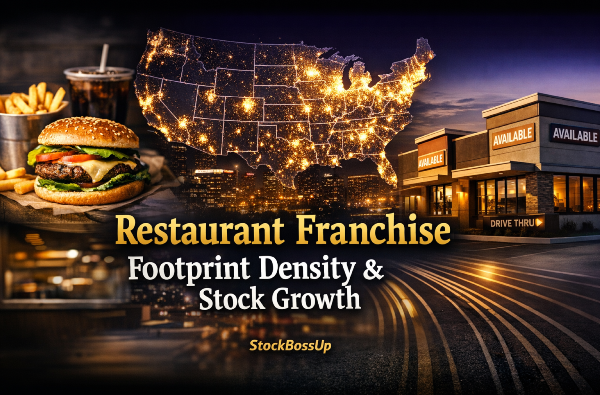
When restaurant chains expand too quickly in the same region, **average unit volume (AUV)** drops. Customers spread their visits across more locations, reducing per‑store profits. Smart brands balance expansion with demand to avoid hitting the saturation wall that slows stock momentum.
🏙️ Real Estate Quality Defines Long‑Term Value
Prime locations drive strong sales, but once those are filled, new stores often land in weaker spots. Lower traffic and visibility reduce franchisee margins and eventually drag down overall stock performance. Real estate strategy becomes a hidden indicator of sustainable growth.
📱 Digital Ordering Changes the Density Equation
Online and delivery channels can turn high density into an advantage. More stores mean faster delivery and better customer satisfaction. However, brands must manage delivery fees and kitchen capacity to keep margins healthy while leveraging digital strength for stock resilience.
💡 Smarter Growth Beats Faster Expansion
The most successful restaurant stocks grow by **data‑driven expansion**, not by adding stores blindly. They track AUV, franchisee health, and market saturation to know when to pause or pivot. This disciplined approach protects profitability and keeps investor confidence high.
The top restaurant stocks often rise or fall based on things most people never see. One of the biggest hidden forces is franchise footprint density. When a brand opens more locations in the same region, it can boost sales at first. But as the footprint grows, something strange happens. Growth slows, even when the brand is still popular. Investors see the slowdown long before customers do, and the stock reacts.
The real challenge is simple: Why do some restaurant chains hit a wall while others keep expanding without losing momentum? The answer is not obvious, and the solution is even less clear. This article breaks down how franchise footprint density and saturation work, why it affects stock performance, and what investors often overlook until it is too late.
Why Do Investors Misread Franchise Density?
Most investors assume more stores equal more revenue. That idea works early in a brand’s life. A chain with 500 stores can double to 1,000 and still find new customers. But once a brand fills its strongest markets, each new store adds less value. This is where many investors misread the signals, failing to see how real estate strategy impacts restaurant stock valuations.
They see rising store counts and assume rising profits. But density changes how customers behave. When too many stores cluster together, sales per unit fall. The brand may still grow total revenue, but the growth rate slows. Stocks often drop when that slowdown becomes clear.
How Does Saturation Change Customer Behavior?
Saturation affects customers in ways that are easy to miss. When a brand opens more stores in the same area, customers do not eat more food. They simply spread their visits across more locations. This lowers average unit volume (AUV). Lower AUV means lower franchisee profits. Lower franchisee profits mean slower expansion.
One unique fact about density is that some chains use satellite stores to intentionally lower wait times, even if it reduces AUV. They do this to protect customer experience, not to maximize per‑store revenue. This strategy works only when the brand has strong pricing power.
| Density Level |
AUV Trend |
Franchisee Mood |
Expansion Pace |
| Low |
Rising |
Optimistic |
Fast |
| Moderate |
Flat |
Cautious |
Slowing |
| High |
Falling |
Concerned |
Stalled |
Why Do Some Brands Thrive Even in Saturated Markets?
Some restaurant chains seem immune to saturation. They open stores close together and still grow. This happens because they rely on digital orders that reduce dine‑in competition and often find that drive-thru optimization has become a competitive moat.
Brands that thrive in dense markets often have strong digital ecosystems. When customers order online, they choose the closest store. More stores mean faster delivery times, which boosts satisfaction.
Why Most People Fail to Spot the Breaking Point
The breaking point is the moment when new stores stop adding meaningful value. Most people fail to spot it because the early numbers look fine. Total revenue rises. Store count rises. The brand appears strong.
| Stage |
What Investors See |
What’s Actually Happening |
| Early Growth |
Strong expansion |
Low density, high demand |
| Mid Growth |
Slower AUV growth |
Markets filling up |
| Late Growth |
Flat same‑store sales |
Saturation pressure |
| Post Peak |
Stock volatility |
Franchisee slowdown |
How Does Density Affect Long‑Term Stock Growth?
Density affects long‑term stock growth in three major ways:
- It limits expansion potential: Once a brand saturates its strongest markets, it must expand into weaker ones.
- It reduces franchisee enthusiasm: Franchisees invest less when they see falling AUV.
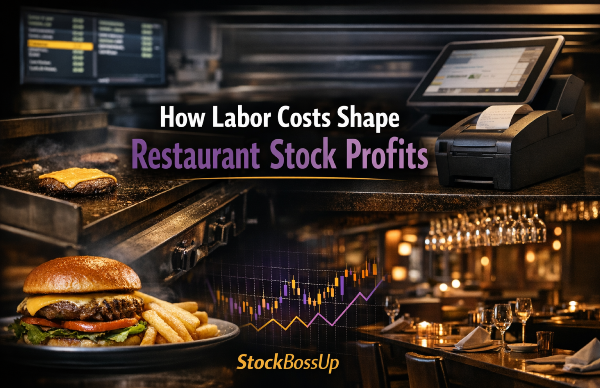
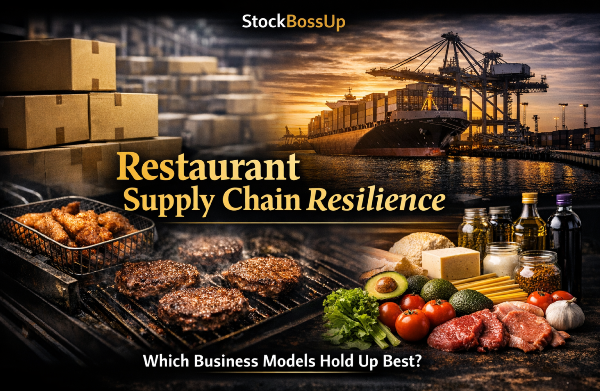
- It increases operational risk: More stores mean more labor and supply chain complexity.
What Role Does Real Estate Play in Saturation?
Real estate is one of the most overlooked parts of franchise density. Good locations are limited. The choice between owned vs. leased locations significantly impacts how a brand handles these costs.
Additionally, the performance shift between urban vs. suburban expansion can determine if a brand hits the saturation wall early or continues to find fresh demand.
Why Do Digital Orders Change the Density Equation?
Digital orders change everything. When customers order online, they choose the closest store. More stores mean faster delivery. Faster delivery means higher satisfaction. This creates a loop where density actually helps the brand.
However, the rise of ghost kitchens and virtual brands has introduced new competition that doesn't rely on traditional storefronts, further complicating the density map.
What Is the Real Solution to Saturation?
The real solution to saturation is not more stores. It is smarter growth. Brands that avoid saturation use site selection algorithms to change their growth potential, ensuring every new pin on the map is data-justified.
They also explore non-traditional locations like airports or colleges to find high-traffic pockets without cannibalizing their existing street-side units.
Final Answer to the Density Problem
The reason some restaurant chains hit a wall while others keep growing is simple: The chains that win understand their density limits. They track AUV, franchisee health, real estate quality, and digital demand. They expand only when the data supports it, growing smarter, not faster.
🏗️ Master the Terrain: Prime Restaurant Real Estate Insights
Unlock the hidden value in your portfolio by mastering the "where" and "how" of restaurant expansion. From high-traffic non-traditional sites to the algorithmic precision of modern site selection, explore how physical footprints dictate fiscal futures.
📍 Strategic Growth & Real Estate in Restaurant Businesses
Market Intel: In an era of shifting demographics, the transition from urban centers to optimized suburban drive-thrus is redefining long-term equity. Use the links above to deep dive into the data driving these shifts.








Understanding the "saturation wall" is critical for evaluating long-term sustainability in the food sector. I have integrated the natural interlinks from your topical cluster and added visual cues to help your readers spot the breaking point before the market does.
🔑 Key Takeaways: Restaurant Franchise Footprint Density & Stock Growth
🍔 Franchise Density Can Boost or Break Growth
When restaurant chains expand too quickly in the same region, **average unit volume (AUV)** drops. Customers spread their visits across more locations, reducing per‑store profits. Smart brands balance expansion with demand to avoid hitting the saturation wall that slows stock momentum.🏙️ Real Estate Quality Defines Long‑Term Value
Prime locations drive strong sales, but once those are filled, new stores often land in weaker spots. Lower traffic and visibility reduce franchisee margins and eventually drag down overall stock performance. Real estate strategy becomes a hidden indicator of sustainable growth.📱 Digital Ordering Changes the Density Equation
Online and delivery channels can turn high density into an advantage. More stores mean faster delivery and better customer satisfaction. However, brands must manage delivery fees and kitchen capacity to keep margins healthy while leveraging digital strength for stock resilience.💡 Smarter Growth Beats Faster Expansion
The most successful restaurant stocks grow by **data‑driven expansion**, not by adding stores blindly. They track AUV, franchisee health, and market saturation to know when to pause or pivot. This disciplined approach protects profitability and keeps investor confidence high.The top restaurant stocks often rise or fall based on things most people never see. One of the biggest hidden forces is franchise footprint density. When a brand opens more locations in the same region, it can boost sales at first. But as the footprint grows, something strange happens. Growth slows, even when the brand is still popular. Investors see the slowdown long before customers do, and the stock reacts.
The real challenge is simple: Why do some restaurant chains hit a wall while others keep expanding without losing momentum? The answer is not obvious, and the solution is even less clear. This article breaks down how franchise footprint density and saturation work, why it affects stock performance, and what investors often overlook until it is too late.
Why Do Investors Misread Franchise Density?
Most investors assume more stores equal more revenue. That idea works early in a brand’s life. A chain with 500 stores can double to 1,000 and still find new customers. But once a brand fills its strongest markets, each new store adds less value. This is where many investors misread the signals, failing to see how real estate strategy impacts restaurant stock valuations.
They see rising store counts and assume rising profits. But density changes how customers behave. When too many stores cluster together, sales per unit fall. The brand may still grow total revenue, but the growth rate slows. Stocks often drop when that slowdown becomes clear.
How Does Saturation Change Customer Behavior?
Saturation affects customers in ways that are easy to miss. When a brand opens more stores in the same area, customers do not eat more food. They simply spread their visits across more locations. This lowers average unit volume (AUV). Lower AUV means lower franchisee profits. Lower franchisee profits mean slower expansion.
One unique fact about density is that some chains use satellite stores to intentionally lower wait times, even if it reduces AUV. They do this to protect customer experience, not to maximize per‑store revenue. This strategy works only when the brand has strong pricing power.
Why Do Some Brands Thrive Even in Saturated Markets?
Some restaurant chains seem immune to saturation. They open stores close together and still grow. This happens because they rely on digital orders that reduce dine‑in competition and often find that drive-thru optimization has become a competitive moat.
Brands that thrive in dense markets often have strong digital ecosystems. When customers order online, they choose the closest store. More stores mean faster delivery times, which boosts satisfaction.
Why Most People Fail to Spot the Breaking Point
The breaking point is the moment when new stores stop adding meaningful value. Most people fail to spot it because the early numbers look fine. Total revenue rises. Store count rises. The brand appears strong.
How Does Density Affect Long‑Term Stock Growth?
Density affects long‑term stock growth in three major ways:
What Role Does Real Estate Play in Saturation?
Real estate is one of the most overlooked parts of franchise density. Good locations are limited. The choice between owned vs. leased locations significantly impacts how a brand handles these costs.
Additionally, the performance shift between urban vs. suburban expansion can determine if a brand hits the saturation wall early or continues to find fresh demand.
Why Do Digital Orders Change the Density Equation?
Digital orders change everything. When customers order online, they choose the closest store. More stores mean faster delivery. Faster delivery means higher satisfaction. This creates a loop where density actually helps the brand.
However, the rise of ghost kitchens and virtual brands has introduced new competition that doesn't rely on traditional storefronts, further complicating the density map.
What Is the Real Solution to Saturation?
The real solution to saturation is not more stores. It is smarter growth. Brands that avoid saturation use site selection algorithms to change their growth potential, ensuring every new pin on the map is data-justified.
They also explore non-traditional locations like airports or colleges to find high-traffic pockets without cannibalizing their existing street-side units.
Final Answer to the Density Problem
The reason some restaurant chains hit a wall while others keep growing is simple: The chains that win understand their density limits. They track AUV, franchisee health, real estate quality, and digital demand. They expand only when the data supports it, growing smarter, not faster.
🏗️ Master the Terrain: Prime Restaurant Real Estate Insights
Unlock the hidden value in your portfolio by mastering the "where" and "how" of restaurant expansion. From high-traffic non-traditional sites to the algorithmic precision of modern site selection, explore how physical footprints dictate fiscal futures.
📍 Strategic Growth & Real Estate in Restaurant Businesses