Last Updated March 17th 2026
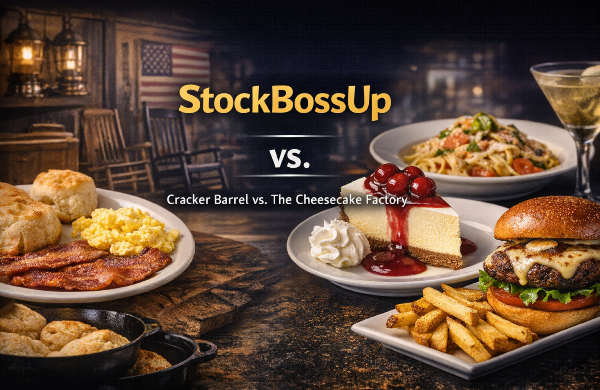
When investors compare restaurant stocks, two names always spark debate: Cracker Barrel and The Cheesecake Factory. Both brands have loyal fans, strong identities, and long histories in American dining. Yet they operate in very different ways. That makes this matchup one of the most interesting in the entire restaurant sector.
In this article, we break down how each company works, what makes each one appealing to investors, and how their business models shape long‑term potential. By the end, you’ll have a clear view of why someone might choose Cracker Barrel or The Cheesecake Factory, depending on their goals.
The Heart of Cracker Barrel’s Business Model
Cracker Barrel Old Country Store (CBRL) is built around a simple idea: comfort. The brand mixes homestyle food with a country‑themed retail store. This creates a unique “restaurant + shopping” experience that few competitors can copy.
The company’s stores are usually located near highways. That helps them capture travelers, families, and older guests who enjoy slower, more traditional dining. The menu focuses on Southern classics like chicken and dumplings, biscuits, and country‑fried steak. These dishes are affordable to make and appeal to a wide audience.
Cracker Barrel also benefits from its retail section. Guests often browse the store while waiting for a table. Many buy gifts, toys, or seasonal items. This adds a second revenue stream that boosts margins during busy seasons.
One detail many investors overlook is how stable Cracker Barrel’s customer base is. The brand attracts repeat visitors who enjoy the familiar atmosphere. That loyalty helps the company stay steady even when the economy slows down.
The Cheesecake Factory’s Modern, Urban Appeal
The Cheesecake Factory (CAKE) takes a very different approach. Instead of country charm, it focuses on large menus, big portions, and a polished casual‑dining experience. Its restaurants are usually in malls, city centers, and high‑traffic retail areas.
The menu is famous for being huge. Guests can choose from salads, pasta, burgers, seafood, and of course, cheesecake. This variety helps the brand attract groups, celebrations, and younger diners who want options.
The Cheesecake Factory also owns other brands, including North Italia and Flower Child. These concepts target higher‑income customers who enjoy modern, chef‑driven food. This gives the company more room to grow in new markets.
One thing that stands out is how well Cheesecake Factory performs during peak dining seasons. The brand is a go‑to spot for birthdays, graduations, and holidays. That gives it strong traffic during key months.
| Company |
Ticker |
Core Strength |
Customer Base |
Restaurant Style |
| Cracker Barrel |
CBRL) |
Food + retail combo |
Families, travelers, older guests |
Country homestyle |
| Cheesecake Factory |
CAKE |
Large menu + premium casual dining |
Younger adults, celebrations, urban diners |
Upscale casual |
Why Cracker Barrel Can Be a Strong Investment
Cracker Barrel’s biggest advantage is its consistency. The brand has been around since 1969, and its formula has barely changed. That stability appeals to investors who want predictable performance.
The company owns most of its locations. That means it controls the real estate, which can be a long‑term asset. Owning property also protects the company from rising rent costs.
Cracker Barrel’s retail section is another strength. It helps the company earn revenue even when dining traffic slows. Seasonal items, holiday gifts, and branded merchandise all add to the bottom line.
The brand also benefits from strong breakfast sales. Breakfast has some of the highest margins in the restaurant industry. Cracker Barrel serves breakfast all day, which helps keep food costs in check.
Another point investors like is the company’s focus on rural and suburban markets. These areas often have lower labor costs and less competition. That helps Cracker Barrel maintain steady margins.
Why Cheesecake Factory Can Be a Strong Investment
Cheesecake Factory shines in a different way. Its brand is known for quality, large portions, and a premium dining experience. That helps it attract customers who are willing to spend more per visit.
The company’s menu variety also gives it a competitive edge. It can appeal to almost any group, which keeps traffic strong. This flexibility helps the brand stay relevant even as food trends change.
Cheesecake Factory’s expansion into new concepts is another major advantage. North Italia and Flower Child target younger, health‑focused customers. These brands are growing fast and could become major revenue drivers.
The company also has strong delivery and takeout performance. Its menu travels well, and cheesecake is a popular delivery dessert. This helps the brand stay competitive in the digital ordering era.
One more strength is its presence in high‑income areas. These markets tend to recover faster after economic downturns. That gives Cheesecake Factory a long‑term growth advantage.
| Category |
Cracker Barrel |
Cheesecake Factory |
| Food Sales |
Strong |
Strong |
| Retail Sales |
Very strong |
Minimal |
| Delivery/Takeout |
Moderate |
Strong |
| Seasonal Traffic |
High |
Very high |
| Expansion Potential |
Moderate |
High |
Revenue Drivers Comparison
Customer Experience: Two Very Different Journeys
Cracker Barrel offers a slow, relaxed dining experience. Guests often spend time browsing the store before or after their meal. The atmosphere feels like a step back in time, with rocking chairs, fireplaces, and old‑fashioned décor.
This experience appeals to families and older guests who enjoy comfort and tradition. It also makes Cracker Barrel a popular stop for road trips. Many travelers plan their routes around Cracker Barrel locations.
Cheesecake Factory, on the other hand, feels modern and energetic. The décor is bold, the lighting is warm, and the menu is full of global flavors. Guests often visit for celebrations or group outings.
The brand’s large portions and famous cheesecake make it a destination restaurant. People go there not just to eat, but to enjoy an experience. This helps the company maintain strong brand recognition.
A Unique Detail About Cracker Barrel
Cracker Barrel’s retail section sells more rocking chairs than any other retailer in the United States. This small detail shows how deeply the brand has shaped American culture.
A Unique Detail About Cheesecake Factory
The Cheesecake Factory’s original menu had only one cheesecake flavor. Today, it offers more than 30. This growth mirrors the company’s expansion into one of the most recognized restaurant brands in the country.
Investment Factors
| Factor |
Cracker Barrel |
Cheesecake Factory |
| Brand Loyalty |
Very strong |
Strong |
| Menu Innovation |
Moderate |
Very strong |
| Real Estate Ownership |
High |
Low |
| Growth Strategy |
Slow and steady |
Multi‑brand expansion |
| Risk Level |
Lower |
Higher |
Which Stock Fits a Value‑Focused Investor?
If you prefer stability, predictable earnings, and a loyal customer base, Cracker Barrel may be the better fit. Its business model is built on consistency. The company owns valuable real estate, maintains strong breakfast sales, and benefits from retail revenue.
Cracker Barrel also tends to perform well in slower economic periods. Its customers are loyal, and its prices are reasonable. That helps the brand stay steady even when consumer spending tightens.
Which Stock Fits a Growth‑Focused Investor?
If you want a company with expansion potential, Cheesecake Factory may be the stronger choice. Its multi‑brand strategy gives it room to grow in new markets. Its menu variety keeps it relevant, and its urban locations attract high‑income customers.
Cheesecake Factory also benefits from strong digital ordering. Its food travels well, and cheesecake is a top delivery dessert. This helps the company reach customers beyond the dining room.
Final Thoughts: Two Strong Brands, Two Different Paths
The choice is your! Which brand is the better investment?
Cracker Barrel and The Cheesecake Factory are both powerful restaurant brands. Yet they appeal to different types of investors. Cracker Barrel offers stability, real estate value, and a loyal customer base. Cheesecake Factory offers growth potential, menu innovation, and strong urban performance.
The right choice depends on your investment style. If you want steady returns and a proven model, Cracker Barrel may be the better pick. If you want long‑term growth and a brand with room to expand, Cheesecake Factory may be the stronger option.
Both companies have shaped American dining in their own ways. And both continue to evolve as the restaurant industry changes. No matter which one you choose, you’re investing in a brand with a clear identity and a strong place in the market.
🔥 Read More: Explore Restaurant Stock Battles



Last Updated March 17th 2026
When investors compare restaurant stocks, two names always spark debate: Cracker Barrel and The Cheesecake Factory. Both brands have loyal fans, strong identities, and long histories in American dining. Yet they operate in very different ways. That makes this matchup one of the most interesting in the entire restaurant sector.
In this article, we break down how each company works, what makes each one appealing to investors, and how their business models shape long‑term potential. By the end, you’ll have a clear view of why someone might choose Cracker Barrel or The Cheesecake Factory, depending on their goals.
The Heart of Cracker Barrel’s Business Model
Cracker Barrel Old Country Store (CBRL) is built around a simple idea: comfort. The brand mixes homestyle food with a country‑themed retail store. This creates a unique “restaurant + shopping” experience that few competitors can copy.
The company’s stores are usually located near highways. That helps them capture travelers, families, and older guests who enjoy slower, more traditional dining. The menu focuses on Southern classics like chicken and dumplings, biscuits, and country‑fried steak. These dishes are affordable to make and appeal to a wide audience.
Cracker Barrel also benefits from its retail section. Guests often browse the store while waiting for a table. Many buy gifts, toys, or seasonal items. This adds a second revenue stream that boosts margins during busy seasons.
One detail many investors overlook is how stable Cracker Barrel’s customer base is. The brand attracts repeat visitors who enjoy the familiar atmosphere. That loyalty helps the company stay steady even when the economy slows down.
The Cheesecake Factory’s Modern, Urban Appeal
The Cheesecake Factory (CAKE) takes a very different approach. Instead of country charm, it focuses on large menus, big portions, and a polished casual‑dining experience. Its restaurants are usually in malls, city centers, and high‑traffic retail areas.
The menu is famous for being huge. Guests can choose from salads, pasta, burgers, seafood, and of course, cheesecake. This variety helps the brand attract groups, celebrations, and younger diners who want options.
The Cheesecake Factory also owns other brands, including North Italia and Flower Child. These concepts target higher‑income customers who enjoy modern, chef‑driven food. This gives the company more room to grow in new markets.
One thing that stands out is how well Cheesecake Factory performs during peak dining seasons. The brand is a go‑to spot for birthdays, graduations, and holidays. That gives it strong traffic during key months.
Why Cracker Barrel Can Be a Strong Investment
Cracker Barrel’s biggest advantage is its consistency. The brand has been around since 1969, and its formula has barely changed. That stability appeals to investors who want predictable performance.
The company owns most of its locations. That means it controls the real estate, which can be a long‑term asset. Owning property also protects the company from rising rent costs.
Cracker Barrel’s retail section is another strength. It helps the company earn revenue even when dining traffic slows. Seasonal items, holiday gifts, and branded merchandise all add to the bottom line.
The brand also benefits from strong breakfast sales. Breakfast has some of the highest margins in the restaurant industry. Cracker Barrel serves breakfast all day, which helps keep food costs in check.
Another point investors like is the company’s focus on rural and suburban markets. These areas often have lower labor costs and less competition. That helps Cracker Barrel maintain steady margins.
Why Cheesecake Factory Can Be a Strong Investment
Cheesecake Factory shines in a different way. Its brand is known for quality, large portions, and a premium dining experience. That helps it attract customers who are willing to spend more per visit.
The company’s menu variety also gives it a competitive edge. It can appeal to almost any group, which keeps traffic strong. This flexibility helps the brand stay relevant even as food trends change.
Cheesecake Factory’s expansion into new concepts is another major advantage. North Italia and Flower Child target younger, health‑focused customers. These brands are growing fast and could become major revenue drivers.
The company also has strong delivery and takeout performance. Its menu travels well, and cheesecake is a popular delivery dessert. This helps the brand stay competitive in the digital ordering era.
One more strength is its presence in high‑income areas. These markets tend to recover faster after economic downturns. That gives Cheesecake Factory a long‑term growth advantage.
Revenue Drivers Comparison
Customer Experience: Two Very Different Journeys
Cracker Barrel offers a slow, relaxed dining experience. Guests often spend time browsing the store before or after their meal. The atmosphere feels like a step back in time, with rocking chairs, fireplaces, and old‑fashioned décor.
This experience appeals to families and older guests who enjoy comfort and tradition. It also makes Cracker Barrel a popular stop for road trips. Many travelers plan their routes around Cracker Barrel locations.
Cheesecake Factory, on the other hand, feels modern and energetic. The décor is bold, the lighting is warm, and the menu is full of global flavors. Guests often visit for celebrations or group outings.
The brand’s large portions and famous cheesecake make it a destination restaurant. People go there not just to eat, but to enjoy an experience. This helps the company maintain strong brand recognition.
A Unique Detail About Cracker Barrel
Cracker Barrel’s retail section sells more rocking chairs than any other retailer in the United States. This small detail shows how deeply the brand has shaped American culture.
A Unique Detail About Cheesecake Factory
The Cheesecake Factory’s original menu had only one cheesecake flavor. Today, it offers more than 30. This growth mirrors the company’s expansion into one of the most recognized restaurant brands in the country.
Investment Factors
Which Stock Fits a Value‑Focused Investor?
If you prefer stability, predictable earnings, and a loyal customer base, Cracker Barrel may be the better fit. Its business model is built on consistency. The company owns valuable real estate, maintains strong breakfast sales, and benefits from retail revenue.
Cracker Barrel also tends to perform well in slower economic periods. Its customers are loyal, and its prices are reasonable. That helps the brand stay steady even when consumer spending tightens.
Which Stock Fits a Growth‑Focused Investor?
If you want a company with expansion potential, Cheesecake Factory may be the stronger choice. Its multi‑brand strategy gives it room to grow in new markets. Its menu variety keeps it relevant, and its urban locations attract high‑income customers.
Cheesecake Factory also benefits from strong digital ordering. Its food travels well, and cheesecake is a top delivery dessert. This helps the company reach customers beyond the dining room.
Final Thoughts: Two Strong Brands, Two Different Paths
The choice is your! Which brand is the better investment?
Cracker Barrel and The Cheesecake Factory are both powerful restaurant brands. Yet they appeal to different types of investors. Cracker Barrel offers stability, real estate value, and a loyal customer base. Cheesecake Factory offers growth potential, menu innovation, and strong urban performance.
The right choice depends on your investment style. If you want steady returns and a proven model, Cracker Barrel may be the better pick. If you want long‑term growth and a brand with room to expand, Cheesecake Factory may be the stronger option.
Both companies have shaped American dining in their own ways. And both continue to evolve as the restaurant industry changes. No matter which one you choose, you’re investing in a brand with a clear identity and a strong place in the market.
🔥 Read More: Explore Restaurant Stock Battles