Restaurant real estate strategy shapes how a brand grows, how much risk it takes, and what kind of returns investors can expect over time. The choice between owning locations and leasing them is one of the most important decisions in the business model.
This guide explains asset-light and asset-heavy approaches, compares their strengths and weaknesses, and shows how they affect valuation, risk, and long-term performance for restaurant investors.
What Is Asset-Light vs. Asset-Heavy in Restaurants?
In simple terms, restaurant companies sit on a spectrum between two real estate strategies:
Asset-heavy: The company owns a large share of its land and buildings.
Asset-light: The company leases most locations or lets franchisees handle real estate.
In an asset-heavy model, real estate is a core part of the business. The company acts as both restaurant operator and landlord. Property sits on the balance sheet and can grow in value over time.
In an asset-light model, the company focuses on running restaurants or collecting franchise fees. It uses leases for most sites so it does not tie up as much capital in land and buildings.
Most large systems blend both ideas. They might own some key sites in prime locations and lease the rest, or let franchisees handle most real estate while keeping tight control over the brand.
How Ownership Works in an Asset-Heavy Model
When a restaurant company owns its locations, it usually buys:
Land
Buildings and improvements
Parking lots, drive-thru lanes, and signage
These assets sit on the balance sheet as property. Over time, they are depreciated for accounting, even if market value rises. The company must also handle taxes, insurance, and maintenance.
In an asset-heavy setup, the company often:
Charges rent to franchisees who operate the restaurants.
Sets long-term lease terms with built-in rent increases.
Keeps strong control over site layout, remodel timing, and use.
This structure creates a second source of income. The operating business earns profit from food sales, while the real estate side earns rent and captures property appreciation.
Some restaurant groups even place the real estate in a separate legal entity. The operating company then leases from the property company, turning rent into a steady, contract-based cash flow stream.
How Leasing Works in an Asset-Light Model
In an asset-light model, the restaurant company does not own much property. Instead, it leases most sites from third-party landlords. Franchisees may also sign leases directly, with the brand only providing guidelines.
Common traits of asset-light leasing:
Lower upfront capital for each new location.
Long-term lease agreements with fixed and variable rent.
Lease costs recorded as operating expenses over time.
This approach lets companies expand into new markets without huge real estate spending. They can open, test, and sometimes exit locations faster than if they owned the land.
The trade-offs include:
Exposure to rising rents and lease escalators.
Fixed lease obligations even when sales fall.
Less control over redevelopment and re-use of sites.
For investors, asset-light models often show higher growth in unit count but also more direct sensitivity to same-store sales trends.
McDonald’s and the Real Estate-Driven Approach
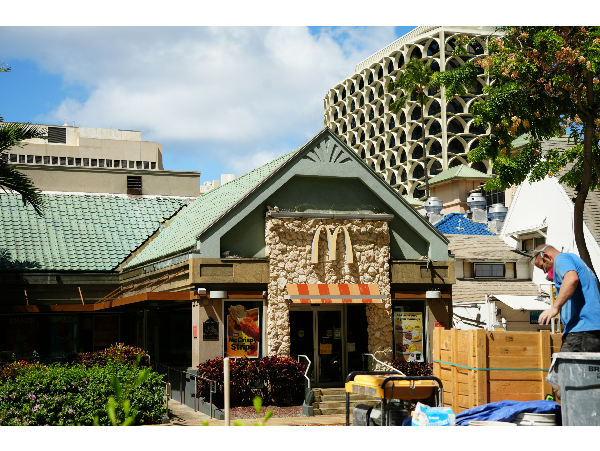
McDonald’s has become a classic example of a real estate-driven strategy. The company is widely known for owning or controlling much of the land under its restaurants, while many of the locations are run by franchisees.
In this model:
The company acts as landlord to many franchise operators.
Franchisees pay rent along with royalties based on sales.
Rent terms are designed to produce strong, stable cash flow.
Real estate plays a major role in the company’s value. The land and buildings can appreciate over time, while rent streams help smooth earnings during ups and downs in restaurant traffic.
Because of this structure, some investors view McDonald’s less like a pure restaurant company and more like a blend of restaurant operator and specialized real estate owner. This mix can make cash flows more predictable over long periods.
Asset-Heavy vs. Asset-Light: Side-by-Side
It helps to compare the two strategies in a simple way.
Feature Asset-Heavy (Own Locations) Asset-Light (Lease / Franchise-Focus)
Upfront capital per unit High for land and buildings Lower; main cost is build-out and fees
Balance sheet structure Large property base, more tangible assets Smaller property base, leaner asset mix
Flexibility to close/move Harder; must sell or repurpose property Easier at lease end or with negotiations
Cash flow stability Supported by rent and property value Tied more directly to restaurant operations
Exposure to property cycles More exposure to real estate markets More exposure to rent levels and lease terms
Typical growth speed Slower, more capital-limited Faster, especially with franchising
Neither model is always better. The key is how well the strategy matches the brand, the market, and management’s skill.
How Real Estate Strategy Changes Risk
Real estate strategy shifts what kind of risk a restaurant company carries, even if total risk feels similar at first glance.
Risk in Asset-Heavy Models
Owning real estate brings:
Risk from property value swings in each region.
Ongoing responsibility for upkeep and capital repairs.
Exposure to local tax and zoning changes.
But it also reduces other risks:
Less exposure to sudden rent spikes.
More control over store upgrades and new uses.
Ability to sell or refinance property if needed.
When times get tough, an asset-heavy operator can sometimes sell non-core sites or do sale-leaseback deals to unlock cash. This can help the company manage debt and stay flexible.
Risk in Asset-Light Models
Leasing brings:
Risk from rising rents and lease escalators over time.
Fixed occupancy costs even when traffic declines.
Possible penalties for closing locations early.
But it also cuts other risks:
Less capital tied up if a market weakens.
Ability to test more sites with lower permanent commitment.
More focus on brand management and operations instead of property.
For investors, the question is whether the company’s cash flows are strong enough to cover lease costs through cycles, and whether it has room to renegotiate or exit weak sites when needed.
Real Estate and Earnings Volatility
Real estate strategy can either smooth or amplify a restaurant company’s earnings.
In an asset-heavy setup:
Rent from franchisees and owned sites tends to be steady.
Depreciation is non-cash, so reported earnings may look lower than actual cash generation.
Earnings swings from restaurant operations can be softened by property income.
In an asset-light setup:
Earnings follow restaurant-level margins more closely.
If same-store sales drop, profits can fall fast because lease and labor costs are mostly fixed.
There is less built-in support from rent or property gains.
Some investors prefer the steadier profile of asset-heavy companies, especially when the economy is uncertain. Others like the “pure play” exposure to restaurant operations in asset-light companies, which may grow faster when conditions are good.
Valuation: How the Market Prices Each Model
Real estate strategy can change how the market values a restaurant stock, even when sales look similar.
Common patterns include:
Asset-heavy companies sometimes trade at lower earnings multiples because they grow more slowly. But their property base can add hidden value the market does not fully reflect.
Asset-light companies often trade at higher multiples if investors believe they can grow rapidly with less capital.
Analysts sometimes do “sum-of-the-parts” work, estimating the value of owned real estate separately and comparing it to the total company value.
If the estimated property value alone makes up a large share of the market price, some investors see a margin of safety. If the stock trades well above that implied real estate value, investors must believe strongly in the brand’s growth and pricing power.
Sample Financial Profiles: Owned vs. Leased Mix
The table below shows a simplified example of two fictional restaurant chains with the same systemwide sales but different real estate strategies.
Item Company A (Asset-Heavy) Company B (Asset-Light)
Systemwide annual sales $4,000,000,000 $4,000,000,000
Locations owned or controlled 65% 15%
Property and equipment (book) $3,200,000,000 $600,000,000
Net debt $1,200,000,000 $700,000,000
Operating margin 19% 21%
Typical valuation multiple (P/E) 18x 22x
Company A shows more property assets and slightly lower margins, but its real estate supports long-term value and borrowing power. Company B has less property, higher margins, and a higher multiple because the market expects faster growth.
An investor might see Company A as a “real estate-backed cash flow” story and Company B as a “high-return growth” story, even though total sales are the same.
Long-Term Returns: Income, Appreciation, and Flexibility
Real estate touches long-term returns through three main channels.
- Income
Owned real estate generates:
Rent from franchise operators.
Implied rent savings when the company operates its own units.
These cash flows can be steady and contract-based, which many investors like for stability. In some strong locations, rent increases are built into contracts, which supports slow, predictable growth.
- Appreciation
Land and well-located buildings can gain value over decades. Even if the book value stays the same or falls due to depreciation, market value can rise.
This creates:
Potential gains if sites are sold.
Hidden asset value that can be unlocked in the future.
Better collateral for borrowing at favorable rates.
- Flexibility (Option Value)
Owning real estate gives the company options:
Sell or do sale-leasebacks to raise cash.
Redevelop sites into new formats or higher-traffic uses.
Move from slower formats to more profitable layouts on the same land.
Asset-light companies do not have the same property base, so they rely more on:
New store openings.
Menu innovation.
Marketing and digital strategy.
Both paths can create strong long-term returns. The asset-heavy path layers property-based value on top of restaurant performance, while the asset-light path leans on brand power and unit growth.
Franchise Systems and Real Estate Control
Franchising adds another twist to real estate strategy. A franchisor can:
Own the land and building, then lease to the franchisee.
Lease from a landlord and sublease to the franchisee.
Let the franchisee handle all real estate decisions and leases.
When the franchisor controls the real estate:
It gains stronger control over locations, layouts, and remodel timing.
It collects rent as well as royalties.
It takes on more property risk and capital needs.
When franchisees control the real estate:
The franchisor grows faster with less capital.
Real estate risk sits with franchisees.
The brand has less direct power over physical changes and site replacement.
Some systems use a mix, keeping ownership in flagship areas and leaving other markets to franchisees. This balance can help protect the brand while still keeping the model relatively asset-light.
Geography, Market Cycles, and Real Estate Strategy
Location always matters in restaurants, but the effect on risk changes with the real estate model.
In asset-heavy companies:
A large property base in growing regions can be a strong long-term advantage.
Heavy concentration in weak or shrinking markets can drag returns down for years.
Property taxes, insurance, and storm or climate risks can hurt certain regions more.
In asset-light companies:
They may avoid owning land in vulnerable areas, reducing direct property risk.
However, they still face rent pressure in hot markets and weak traffic in shrinking ones.
Lease terms, co-tenancy clauses, and renewal options shape how well they ride local cycles.
Investors should look at where a brand’s sites are clustered and how that mix matches future population and income trends. A company that owns a lot of land in areas expected to grow can have an edge that is not fully visible in current earnings.
Cash Flow, Debt, and Balance Sheet Strength
Real estate structure shapes how a company uses debt and how strong its balance sheet looks.
Asset-Heavy Balance Sheets
In asset-heavy setups:
Property can be used as collateral for long-term loans.
Debt may look larger in dollar terms, but backed by tangible assets.
The company can refinance or sell property to manage leverage.
If managed carefully, this can create a stable capital structure. But if management adds too much debt against property, rising rates or a property slump can strain cash flows.
Asset-Light Balance Sheets
In asset-light situations:
Debt levels may be lower relative to sales, but there is also less asset backing.
Leases create off-balance or on-balance obligations that act like debt in practice.
Cash flow must cover both operations and lease commitments through cycles.
Investors often look at metrics such as net debt to EBITDA, lease-adjusted leverage, and interest coverage to judge whether the company’s debt fits its real estate strategy.
Real Estate Strategy and Inflation
Inflation affects both owning and leasing, but in different ways.
For owners:
Property values often rise over time as building costs and land prices increase.
Fixed-rate mortgages become cheaper in real terms if inflation is high.
Rents charged to franchisees or tenants can escalate along with inflation.
For lessees:
Lease escalators can push occupancy costs up year after year.
Renewals can become more expensive if market rents jump.
There is less direct benefit from property appreciation, since the company does not own the land.
Investors looking for inflation protection sometimes favor companies with meaningful real estate holdings. But they also watch whether that company can keep property taxes and maintenance costs under control as prices rise.
How to Analyze a Restaurant’s Real Estate Strategy
If you want to understand a restaurant stock’s real estate profile, you can use a simple checklist.
Check owned vs. leased mix
Look for the percentage of locations owned, leased, or controlled through long-term ground leases.
Note whether the company is shifting more toward owning or leasing over time.
Review the balance sheet
See how large the property and equipment line is compared to total assets.
Compare net debt to the estimated value of real estate and to cash flow.
Read management’s comments
Does management talk about real estate as a core strength?
Are there plans for sale-leasebacks, spin-offs, or real estate deals to unlock value?
Examine growth plans
Does the company plan many franchised units with franchisee-owned sites?
Is it investing heavily in company-owned flagships or premium corners?
Consider the economic backdrop
Think about how rents, interest rates, and property values in key markets might move over the next decade.
Ask whether the company’s structure helps or hurts in that environment.
This approach helps you see whether the stock fits your own view of risk and return.
Linking Real Estate Strategy to Long-Term Shareholder Returns
Over long periods, a restaurant’s real estate strategy influences:
How fast it can grow unit count.
How stable its cash flows are through recessions and booms.
How much hidden value sits on the balance sheet.
How easily it can handle shocks like rate spikes or local downturns.
An asset-light brand with strong franchise partners might deliver rapid growth and high returns on capital, but with more earnings volatility. An asset-heavy brand might grow more slowly, but its property base can provide steady rent and optionality.
As an investor, you are not just buying this year’s earnings. You are buying a mix of brand, operations, and property. Understanding how owned and leased locations work together inside that mix is key to judging valuation, risk, and the potential for long-term compounding.
Restaurant real estate strategy shapes how a brand grows, how much risk it takes, and what kind of returns investors can expect over time. The choice between owning locations and leasing them is one of the most important decisions in the business model.
This guide explains asset-light and asset-heavy approaches, compares their strengths and weaknesses, and shows how they affect valuation, risk, and long-term performance for restaurant investors.
What Is Asset-Light vs. Asset-Heavy in Restaurants? In simple terms, restaurant companies sit on a spectrum between two real estate strategies:
Asset-heavy: The company owns a large share of its land and buildings.
Asset-light: The company leases most locations or lets franchisees handle real estate.
In an asset-heavy model, real estate is a core part of the business. The company acts as both restaurant operator and landlord. Property sits on the balance sheet and can grow in value over time.
In an asset-light model, the company focuses on running restaurants or collecting franchise fees. It uses leases for most sites so it does not tie up as much capital in land and buildings.
Most large systems blend both ideas. They might own some key sites in prime locations and lease the rest, or let franchisees handle most real estate while keeping tight control over the brand.
How Ownership Works in an Asset-Heavy Model When a restaurant company owns its locations, it usually buys:
Land
Buildings and improvements
Parking lots, drive-thru lanes, and signage
These assets sit on the balance sheet as property. Over time, they are depreciated for accounting, even if market value rises. The company must also handle taxes, insurance, and maintenance.
In an asset-heavy setup, the company often:
Charges rent to franchisees who operate the restaurants.
Sets long-term lease terms with built-in rent increases.
Keeps strong control over site layout, remodel timing, and use.
This structure creates a second source of income. The operating business earns profit from food sales, while the real estate side earns rent and captures property appreciation.
Some restaurant groups even place the real estate in a separate legal entity. The operating company then leases from the property company, turning rent into a steady, contract-based cash flow stream.
How Leasing Works in an Asset-Light Model In an asset-light model, the restaurant company does not own much property. Instead, it leases most sites from third-party landlords. Franchisees may also sign leases directly, with the brand only providing guidelines.
Common traits of asset-light leasing:
Lower upfront capital for each new location.
Long-term lease agreements with fixed and variable rent.
Lease costs recorded as operating expenses over time.
This approach lets companies expand into new markets without huge real estate spending. They can open, test, and sometimes exit locations faster than if they owned the land.
The trade-offs include:
Exposure to rising rents and lease escalators.
Fixed lease obligations even when sales fall.
Less control over redevelopment and re-use of sites.
For investors, asset-light models often show higher growth in unit count but also more direct sensitivity to same-store sales trends.
McDonald’s and the Real Estate-Driven Approach McDonald’s has become a classic example of a real estate-driven strategy. The company is widely known for owning or controlling much of the land under its restaurants, while many of the locations are run by franchisees.
In this model:
The company acts as landlord to many franchise operators.
Franchisees pay rent along with royalties based on sales.
Rent terms are designed to produce strong, stable cash flow.
Real estate plays a major role in the company’s value. The land and buildings can appreciate over time, while rent streams help smooth earnings during ups and downs in restaurant traffic.
Because of this structure, some investors view McDonald’s less like a pure restaurant company and more like a blend of restaurant operator and specialized real estate owner. This mix can make cash flows more predictable over long periods.
Asset-Heavy vs. Asset-Light: Side-by-Side It helps to compare the two strategies in a simple way.
Feature Asset-Heavy (Own Locations) Asset-Light (Lease / Franchise-Focus) Upfront capital per unit High for land and buildings Lower; main cost is build-out and fees Balance sheet structure Large property base, more tangible assets Smaller property base, leaner asset mix Flexibility to close/move Harder; must sell or repurpose property Easier at lease end or with negotiations Cash flow stability Supported by rent and property value Tied more directly to restaurant operations Exposure to property cycles More exposure to real estate markets More exposure to rent levels and lease terms Typical growth speed Slower, more capital-limited Faster, especially with franchising Neither model is always better. The key is how well the strategy matches the brand, the market, and management’s skill.
How Real Estate Strategy Changes Risk Real estate strategy shifts what kind of risk a restaurant company carries, even if total risk feels similar at first glance.
Risk in Asset-Heavy Models Owning real estate brings:
Risk from property value swings in each region.
Ongoing responsibility for upkeep and capital repairs.
Exposure to local tax and zoning changes.
But it also reduces other risks:
Less exposure to sudden rent spikes.
More control over store upgrades and new uses.
Ability to sell or refinance property if needed.
When times get tough, an asset-heavy operator can sometimes sell non-core sites or do sale-leaseback deals to unlock cash. This can help the company manage debt and stay flexible.
Risk in Asset-Light Models Leasing brings:
Risk from rising rents and lease escalators over time.
Fixed occupancy costs even when traffic declines.
Possible penalties for closing locations early.
But it also cuts other risks:
Less capital tied up if a market weakens.
Ability to test more sites with lower permanent commitment.
More focus on brand management and operations instead of property.
For investors, the question is whether the company’s cash flows are strong enough to cover lease costs through cycles, and whether it has room to renegotiate or exit weak sites when needed.
Real Estate and Earnings Volatility Real estate strategy can either smooth or amplify a restaurant company’s earnings.
In an asset-heavy setup:
Rent from franchisees and owned sites tends to be steady.
Depreciation is non-cash, so reported earnings may look lower than actual cash generation.
Earnings swings from restaurant operations can be softened by property income.
In an asset-light setup:
Earnings follow restaurant-level margins more closely.
If same-store sales drop, profits can fall fast because lease and labor costs are mostly fixed.
There is less built-in support from rent or property gains.
Some investors prefer the steadier profile of asset-heavy companies, especially when the economy is uncertain. Others like the “pure play” exposure to restaurant operations in asset-light companies, which may grow faster when conditions are good.
Valuation: How the Market Prices Each Model Real estate strategy can change how the market values a restaurant stock, even when sales look similar.
Common patterns include:
Asset-heavy companies sometimes trade at lower earnings multiples because they grow more slowly. But their property base can add hidden value the market does not fully reflect.
Asset-light companies often trade at higher multiples if investors believe they can grow rapidly with less capital.
Analysts sometimes do “sum-of-the-parts” work, estimating the value of owned real estate separately and comparing it to the total company value.
If the estimated property value alone makes up a large share of the market price, some investors see a margin of safety. If the stock trades well above that implied real estate value, investors must believe strongly in the brand’s growth and pricing power.
Sample Financial Profiles: Owned vs. Leased Mix The table below shows a simplified example of two fictional restaurant chains with the same systemwide sales but different real estate strategies.
Item Company A (Asset-Heavy) Company B (Asset-Light) Systemwide annual sales $4,000,000,000 $4,000,000,000 Locations owned or controlled 65% 15% Property and equipment (book) $3,200,000,000 $600,000,000 Net debt $1,200,000,000 $700,000,000 Operating margin 19% 21% Typical valuation multiple (P/E) 18x 22x Company A shows more property assets and slightly lower margins, but its real estate supports long-term value and borrowing power. Company B has less property, higher margins, and a higher multiple because the market expects faster growth.
An investor might see Company A as a “real estate-backed cash flow” story and Company B as a “high-return growth” story, even though total sales are the same.
Long-Term Returns: Income, Appreciation, and Flexibility Real estate touches long-term returns through three main channels.
Rent from franchise operators.
Implied rent savings when the company operates its own units.
These cash flows can be steady and contract-based, which many investors like for stability. In some strong locations, rent increases are built into contracts, which supports slow, predictable growth.
This creates:
Potential gains if sites are sold.
Hidden asset value that can be unlocked in the future.
Better collateral for borrowing at favorable rates.
Sell or do sale-leasebacks to raise cash.
Redevelop sites into new formats or higher-traffic uses.
Move from slower formats to more profitable layouts on the same land.
Asset-light companies do not have the same property base, so they rely more on:
New store openings.
Menu innovation.
Marketing and digital strategy.
Both paths can create strong long-term returns. The asset-heavy path layers property-based value on top of restaurant performance, while the asset-light path leans on brand power and unit growth.
Franchise Systems and Real Estate Control Franchising adds another twist to real estate strategy. A franchisor can:
Own the land and building, then lease to the franchisee.
Lease from a landlord and sublease to the franchisee.
Let the franchisee handle all real estate decisions and leases.
When the franchisor controls the real estate:
It gains stronger control over locations, layouts, and remodel timing.
It collects rent as well as royalties.
It takes on more property risk and capital needs.
When franchisees control the real estate:
The franchisor grows faster with less capital.
Real estate risk sits with franchisees.
The brand has less direct power over physical changes and site replacement.
Some systems use a mix, keeping ownership in flagship areas and leaving other markets to franchisees. This balance can help protect the brand while still keeping the model relatively asset-light.
Geography, Market Cycles, and Real Estate Strategy Location always matters in restaurants, but the effect on risk changes with the real estate model.
In asset-heavy companies:
A large property base in growing regions can be a strong long-term advantage.
Heavy concentration in weak or shrinking markets can drag returns down for years.
Property taxes, insurance, and storm or climate risks can hurt certain regions more.
In asset-light companies:
They may avoid owning land in vulnerable areas, reducing direct property risk.
However, they still face rent pressure in hot markets and weak traffic in shrinking ones.
Lease terms, co-tenancy clauses, and renewal options shape how well they ride local cycles.
Investors should look at where a brand’s sites are clustered and how that mix matches future population and income trends. A company that owns a lot of land in areas expected to grow can have an edge that is not fully visible in current earnings.
Cash Flow, Debt, and Balance Sheet Strength Real estate structure shapes how a company uses debt and how strong its balance sheet looks.
Asset-Heavy Balance Sheets In asset-heavy setups:
Property can be used as collateral for long-term loans.
Debt may look larger in dollar terms, but backed by tangible assets.
The company can refinance or sell property to manage leverage.
If managed carefully, this can create a stable capital structure. But if management adds too much debt against property, rising rates or a property slump can strain cash flows.
Asset-Light Balance Sheets In asset-light situations:
Debt levels may be lower relative to sales, but there is also less asset backing.
Leases create off-balance or on-balance obligations that act like debt in practice.
Cash flow must cover both operations and lease commitments through cycles.
Investors often look at metrics such as net debt to EBITDA, lease-adjusted leverage, and interest coverage to judge whether the company’s debt fits its real estate strategy.
Real Estate Strategy and Inflation Inflation affects both owning and leasing, but in different ways.
For owners:
Property values often rise over time as building costs and land prices increase.
Fixed-rate mortgages become cheaper in real terms if inflation is high.
Rents charged to franchisees or tenants can escalate along with inflation.
For lessees:
Lease escalators can push occupancy costs up year after year.
Renewals can become more expensive if market rents jump.
There is less direct benefit from property appreciation, since the company does not own the land.
Investors looking for inflation protection sometimes favor companies with meaningful real estate holdings. But they also watch whether that company can keep property taxes and maintenance costs under control as prices rise.
How to Analyze a Restaurant’s Real Estate Strategy If you want to understand a restaurant stock’s real estate profile, you can use a simple checklist.
Check owned vs. leased mix
Look for the percentage of locations owned, leased, or controlled through long-term ground leases.
Note whether the company is shifting more toward owning or leasing over time.
Review the balance sheet
See how large the property and equipment line is compared to total assets.
Compare net debt to the estimated value of real estate and to cash flow.
Read management’s comments
Does management talk about real estate as a core strength?
Are there plans for sale-leasebacks, spin-offs, or real estate deals to unlock value?
Examine growth plans
Does the company plan many franchised units with franchisee-owned sites?
Is it investing heavily in company-owned flagships or premium corners?
Consider the economic backdrop
Think about how rents, interest rates, and property values in key markets might move over the next decade.
Ask whether the company’s structure helps or hurts in that environment.
This approach helps you see whether the stock fits your own view of risk and return.
Linking Real Estate Strategy to Long-Term Shareholder Returns Over long periods, a restaurant’s real estate strategy influences:
How fast it can grow unit count.
How stable its cash flows are through recessions and booms.
How much hidden value sits on the balance sheet.
How easily it can handle shocks like rate spikes or local downturns.
An asset-light brand with strong franchise partners might deliver rapid growth and high returns on capital, but with more earnings volatility. An asset-heavy brand might grow more slowly, but its property base can provide steady rent and optionality.
As an investor, you are not just buying this year’s earnings. You are buying a mix of brand, operations, and property. Understanding how owned and leased locations work together inside that mix is key to judging valuation, risk, and the potential for long-term compounding.